Icon

Overcollateralized CDP on Robinhood Chain

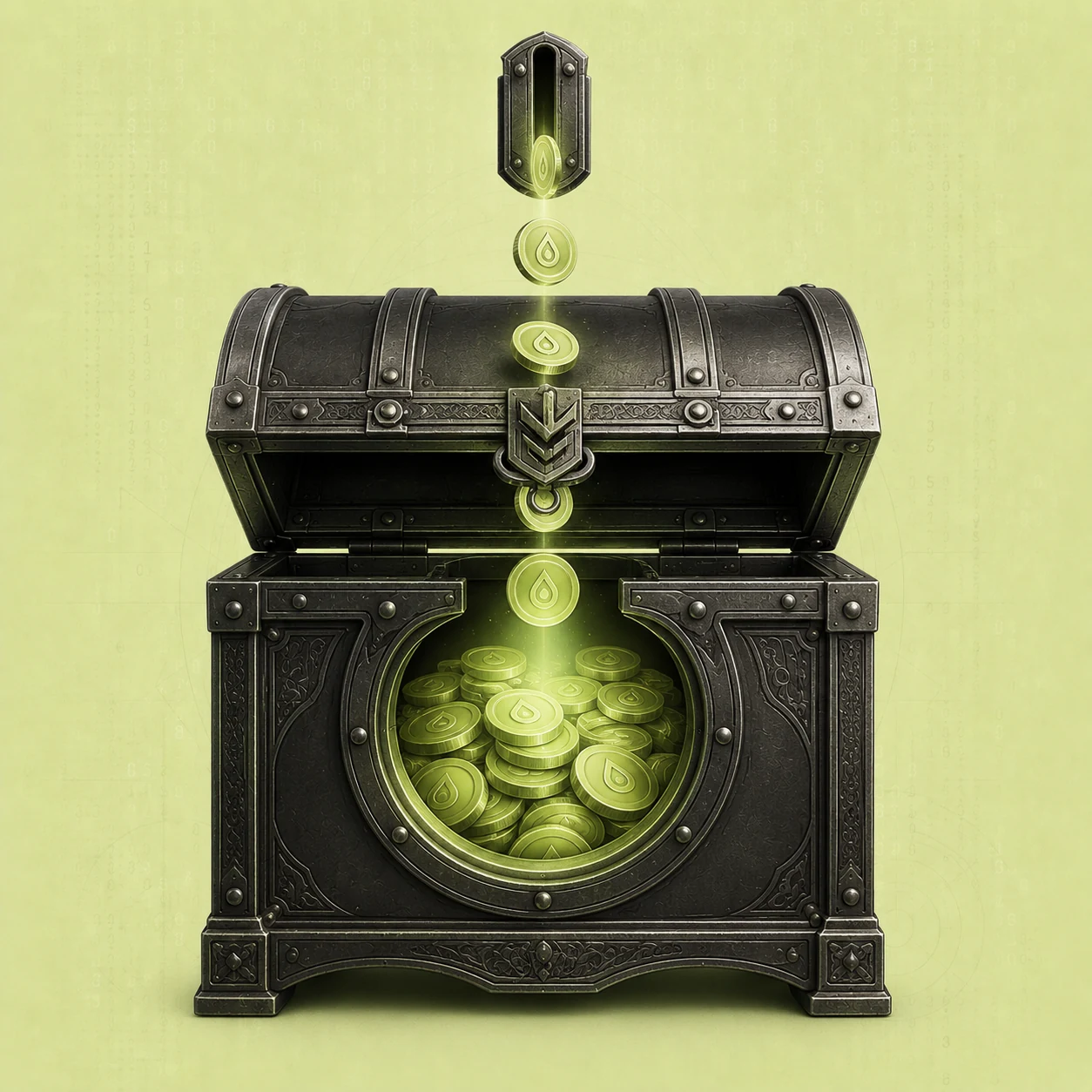
Keep your arrows. Draw the value.

Supply crypto, stablecoins, or tokenized equities as collateral, mint qUSD against them, and keep your upside without selling a share.

BG Image

Open a Vault, Mint qUSD


Positions

  • Tokenized equity vault

  • Liquid staking vault

  • Stablecoin vault

  • Crypto major vault

BG Image

Open a Vault, Mint qUSD


Positions

  • Tokenized equity vault

  • Liquid staking vault

  • Stablecoin vault

  • Crypto major vault

Image
  • Brand Image
  • Brand Image
  • Brand Image
  • Brand Image
  • Brand Image
  • Brand Image
  • Brand Image
  • Brand Image
  • Brand Image
  • Brand Image
  • Brand Image
  • Brand Image
  • Brand Image
  • Brand Image
  • Brand Image
  • Brand Image
  • Brand Image
  • Brand Image
  • Brand Image
  • Brand Image
  • Brand Image

The Problem

Selling Triggers Taxes

Selling Triggers Taxes

Selling a position to raise liquidity triggers a taxable event and permanently ends your exposure to the asset.

Selling Triggers Taxes

Selling a position to raise liquidity triggers a taxable event and permanently ends your exposure to the asset.

Idle Collateral

Idle Collateral

Assets left sitting in a wallet earn nothing and back nothing. Locked in a vault, the same collateral mints qUSD you can actually put to work.

Idle Collateral

Assets left sitting in a wallet earn nothing and back nothing. Locked in a vault, the same collateral mints qUSD you can actually put to work.

Fragmented Liquidity

Fragmented Liquidity

Liquidity split across wallets, chains, and venues is hard to deploy. Quiver concentrates it into one overcollateralized position backed by real assets.

Fragmented Liquidity

Liquidity split across wallets, chains, and venues is hard to deploy. Quiver concentrates it into one overcollateralized position backed by real assets.

The Solution

Supply Collateral, Mint qUSD, and Keep Your Upside with a Single Overcollateralized Debt Position

Vault Manager

Open a Vault and Mint qUSD in One Step

Deposit one approved asset, mint qUSD up to your collateral LTV, and repay anytime to release your collateral. Clean ERC-20 debt accounting throughout.

One asset, one debt, one vault

Mint up to your collateral LTV

Repay anytime to release collateral

BG Image

Vault Manager

Choose your collateral and target LTV.

Supply mWETH, mint qUSD at 72% LTV

ImageImage

Updates & return agent

Health factor 1.64, LTV 48.8%

Minted successfully

Enter collateral amount...

BG Image

Vault Manager

Choose your collateral and target LTV.

Supply mWETH, mint qUSD at 72% LTV

Image

Updates & return agent

Health factor 1.64, LTV 48.8%

Minted successfully

Enter collateral amount...

BG Image

Vault Manager

Choose your collateral and target LTV.

Supply mWETH, mint qUSD at 72% LTV

Image

Updates & return agent

Health factor 1.64, LTV 48.8%

Minted successfully

Enter collateral amount...

BG Image

Vault - Healthy

Health Factor

Deposit collateral

Mint qUSD against it

Score & qualify lead

Repay plus stability fee

Release your collateral

LTV

0%

0%

BG Image

Vault - Healthy

Health Factor

Deposit collateral

Mint qUSD against it

Score & qualify lead

Repay plus stability fee

Release your collateral

LTV

0%

0%

BG Image

Vault - Healthy

Health Factor

Deposit collateral

Mint qUSD against it

Score & qualify lead

Repay plus stability fee

Release your collateral

LTV

0%

0%

Liquidations

Liquidations Handled by the Stability Pool

When a vault falls below health factor 1, the Stability Pool burns the debt and takes the collateral at a discount. One unified liquidation path for every collateral type.

One unified liquidation path

Depositors earn the discount

Redistribution fallback for solvency

Analytics & Insights

Real Revenue Flows to the Surplus Buffer

Every fee is paid in real assets and flows to the Surplus Buffer, a governance-controlled reserve that backstops bad debt before it ever touches depositors.

Stability fee 0.5% to 4% APR

Liquidation penalty 10% to 13%

Redemption fee 0.25% to 2%

BG Image

Surplus Buffer

1,247

TVL

98.4%

Solvency

1.2s

qUSD Peg

qUSD minted, last 12 hours

Equity vaults

342 tasks

Vault Manager

289 tasks

Crypto vaults

156 tasks

BG Image

Surplus Buffer

1,247

TVL

98.4%

Solvency

1.2s

qUSD Peg

qUSD minted, last 12 hours

Equity vaults

342 tasks

Vault Manager

289 tasks

Crypto vaults

156 tasks

BG Image

Surplus Buffer

1,247

TVL

98.4%

Solvency

1.2s

qUSD Peg

qUSD minted, last 12 hours

Equity vaults

342 tasks

Vault Manager

289 tasks

Crypto vaults

156 tasks

ROI

Impact You Can Measure

0
0
x

Minimum overcollateralization

0
0
%

Held in the Surplus Buffer

BG Shape

Borrow against your most valuable, hardest-to-sell positions

Unlock liquidity from crypto, stablecoins, and tokenized equities without selling, without bridging, and without giving up your upside.

0
0
.
0
%
0
0
.
0
%
0
0
.
0
%

Redeemable at par, always

How It Works

How Quiver Turns Collateral You Already Hold into Spendable Liquidity

Graph Image
Graph Image
Graph Image
Graph Image
Graph Image
Graph Image
Graph Image
Graph Image

Collateral

Image
Graph Image
Image
Graph Image

Supported Collateral

Supply crypto majors, liquid-staking tokens, stablecoins, or tokenized equities and ETFs issued natively on Robinhood Chain.

SUPPLY

Collateral

MINT

Mint qUSD

BORROW

Keep Upside

Health factor healthy

Mint qUSD

Mint qUSD against your vault up to its LTV limit. Debt accrues against the stability fee, and repaying releases your collateral.

 
  • qUSD Minted

    Health Factor 1.64

    LTV 48.8%

    Debt Accruing

    Icon
    Icon

    Repay Anytime

Redemption Router

qUSD redeems at par against collateral. The Redemption Router routes redemptions to the lowest-health-factor vaults, so pressure lands on the riskiest debt first.

qUSD In

Redemption Router

  • USDC

  • WETH

  • WBTC

  • mAAPL

Oracle Aggregator

Chainlink feeds for crypto and stablecoins, plus a dedicated tokenized-equity NAV oracle synced to the Robinhood Chain equity venue, with closed-market handling.

Image
Image
Image

Governance

QUIV is a fixed-supply governance token. One token, one vote, over collateral onboarding, risk parameters, the fee curve, Surplus Buffer allocation, and the oracle set.

  • Collateral onboarding

  • Risk parameters

  • Fee curve

  • Surplus Buffer

  • Oracle set

  • Debt ceilings

  • Vote directly

  • Fixed supply

  • No dilution

  • One token one vote

  • Collateral onboarding

  • Risk parameters

  • Oracle set

  • Fee curve

  • Surplus Buffer

  • Oracle set

  • Debt ceilings

Collateral

Collateral Across Every Asset Class

Stablecoins

USDC and yield-bearing sUSDe at up to 90% LTV, the most capital-efficient collateral in the system

Stablecoins

USDC and yield-bearing sUSDe at up to 90% LTV, the most capital-efficient collateral in the system

Stablecoins

USDC and yield-bearing sUSDe at up to 90% LTV, the most capital-efficient collateral in the system

Liquid Staking

wstETH and weETH keep earning staking yield while backing your qUSD debt at up to 72% LTV

Liquid Staking

wstETH and weETH keep earning staking yield while backing your qUSD debt at up to 72% LTV

Liquid Staking

wstETH and weETH keep earning staking yield while backing your qUSD debt at up to 72% LTV

Crypto Majors

WETH and WBTC, the deepest and most liquid collateral, accepted at 75% and 70% LTV

Crypto Majors

WETH and WBTC, the deepest and most liquid collateral, accepted at 75% and 70% LTV

Crypto Majors

WETH and WBTC, the deepest and most liquid collateral, accepted at 75% and 70% LTV

Tier 1 Equities

Large-cap, index-member tokenized equities with high daily volume, accepted at 55% LTV

Tier 1 Equities

Large-cap, index-member tokenized equities with high daily volume, accepted at 55% LTV

Tier 2 Equities

Smaller-cap, lower-liquidity tokenized equities, onboarded conservatively at 40% LTV

Tier 2 Equities

Smaller-cap, lower-liquidity tokenized equities, onboarded conservatively at 40% LTV

Tier 2 Equities

Smaller-cap, lower-liquidity tokenized equities, onboarded conservatively at 40% LTV

ETFs & RWAs

Tokenized ETFs and real-world assets issued and settled natively on Robinhood Chain

ETFs & RWAs

Tokenized ETFs and real-world assets issued and settled natively on Robinhood Chain

BG Image
Brand Image

Stablecoins mint at the highest loan-to-value in the system.

85%

Max LTV on stablecoin vaults

Image

USDC opens vaults at 90% LTV with a 95% liquidation threshold. sUSDe, the yield-bearing stablecoin, follows at 85% with debt tracked as clean ERC-20 accounting.

Colton Pond

Head of Partnership

BG Image
Brand Image

Crypto majors back qUSD with the deepest liquidity on chain

0%

Max LTV on stablecoin vaults

Image

WETH and WBTC are scored on liquidity depth, volatility, and oracle quality, then onboarded at 75% and 70% LTV with liquidation thresholds of 82% and 78%.

Ethan Walker

CTO

BG Image
Brand Image

Liquid staking tokens keep earning while they back your debt

0%

Max LTV on stablecoin vaults

Image

"Quiver Money organizes automation workflows effectively, and its orchestration layer reduces system complexity, enhances control, and enables smooth scalable growth with consistent performance and operational stability."

Sophia Martinez

Product Manager

BG Image
Brand Image

Tokenized equities borrow without triggering a taxable sale

0%

Max LTV on stablecoin vaults

Image

"Quiver Money delivers clarity to automation processes, while its orchestration layer simplifies complex systems and improves coordination, ensuring consistent scalable performance with reliable and stable execution."

Noah Williams

Cloud Engineer

BG Image
Brand Image

Stablecoins mint at the highest loan-to-value in the system.

85%

Max LTV on stablecoin vaults

Image

USDC opens vaults at 90% LTV with a 95% liquidation threshold. sUSDe, the yield-bearing stablecoin, follows at 85% with debt tracked as clean ERC-20 accounting.

Colton Pond

Head of Partnership

BG Image
Brand Image

Crypto majors back qUSD with the deepest liquidity on chain

0%

Max LTV on stablecoin vaults

Image

WETH and WBTC are scored on liquidity depth, volatility, and oracle quality, then onboarded at 75% and 70% LTV with liquidation thresholds of 82% and 78%.

Ethan Walker

CTO

BG Image
Brand Image

Liquid staking tokens keep earning while they back your debt

0%

Max LTV on stablecoin vaults

Image

"Quiver Money organizes automation workflows effectively, and its orchestration layer reduces system complexity, enhances control, and enables smooth scalable growth with consistent performance and operational stability."

Sophia Martinez

Product Manager

BG Image
Brand Image

Tokenized equities borrow without triggering a taxable sale

0%

Max LTV on stablecoin vaults

Image

"Quiver Money delivers clarity to automation processes, while its orchestration layer simplifies complex systems and improves coordination, ensuring consistent scalable performance with reliable and stable execution."

Noah Williams

Cloud Engineer

BG Image
Brand Image

Stablecoins mint at the highest loan-to-value in the system.

85%

Max LTV on stablecoin vaults

Image

USDC opens vaults at 90% LTV with a 95% liquidation threshold. sUSDe, the yield-bearing stablecoin, follows at 85% with debt tracked as clean ERC-20 accounting.

Colton Pond

Head of Partnership

BG Image
Brand Image

Crypto majors back qUSD with the deepest liquidity on chain

0%

Max LTV on stablecoin vaults

Image

WETH and WBTC are scored on liquidity depth, volatility, and oracle quality, then onboarded at 75% and 70% LTV with liquidation thresholds of 82% and 78%.

Ethan Walker

CTO

BG Image
Brand Image

Liquid staking tokens keep earning while they back your debt

0%

Max LTV on stablecoin vaults

Image

"Quiver Money organizes automation workflows effectively, and its orchestration layer reduces system complexity, enhances control, and enables smooth scalable growth with consistent performance and operational stability."

Sophia Martinez

Product Manager

BG Image
Brand Image

Tokenized equities borrow without triggering a taxable sale

0%

Max LTV on stablecoin vaults

Image

"Quiver Money delivers clarity to automation processes, while its orchestration layer simplifies complex systems and improves coordination, ensuring consistent scalable performance with reliable and stable execution."

Noah Williams

Cloud Engineer

Compliance

Risk, Stated Plainly, with Mitigations

Audited

Overcollateralized

Non-custodial

qUSD Peg Protection

Direct at-par redemption anchors qUSD through continuous, permissionless arbitrage

qUSD Peg Protection

Direct at-par redemption anchors qUSD through continuous, permissionless arbitrage

qUSD Peg Protection

Direct at-par redemption anchors qUSD through continuous, permissionless arbitrage

Cascading Liquidations

Per-collateral debt ceilings, conservative Tier 2 parameters, and a redistribution fallback keep the system solvent

Cascading Liquidations

Per-collateral debt ceilings, conservative Tier 2 parameters, and a redistribution fallback keep the system solvent

Cascading Liquidations

Per-collateral debt ceilings, conservative Tier 2 parameters, and a redistribution fallback keep the system solvent

Market-Hours Gap

Widened liquidation buffer and paused borrowing near market close, so no vault mints against a stale price

Market-Hours Gap

Widened liquidation buffer and paused borrowing near market close, so no vault mints against a stale price

Market-Hours Gap

Widened liquidation buffer and paused borrowing near market close, so no vault mints against a stale price

What Exactly Is a Vault?

A vault is a single-owner position holding one collateral asset against one debt balance, tracked as clean, composable ERC-20 debt accounting. Deposit an approved asset, mint qUSD up to its LTV limit, and repay debt plus the stability fee at any time to release your collateral.

What Collateral Can I Supply?

AI agents can connect to a wide range of tools to expand their capabilities and automate tasks more effectively. These typically include APIs, databases, CRM systems, cloud platforms, messaging apps, and third-party services.

How Is qUSD Kept at One Dollar?

You measure an AI agent’s success by how well it achieves its goals and improves outcomes over time. Key indicators include task completion rate, accuracy of responses, and how often users get the right result without needing help.

What Happens if a Vault Becomes Unhealthy?

User satisfaction can be evaluated using a mix of direct feedback and behavioral data. Common metrics include customer satisfaction scores (CSAT), where users rate their experience, and Net Promoter Score (NPS), which measures how likely they are to recommend the service.

Who Controls the Protocol Parameters?

AI performance reviews should be done on a regular, structured cycle·plus continuous monitoring in the background. For most use cases, a monthly review works well to assess key metrics like accuracy, task success rate, and user satisfaction.

How Do I Open a Vault and Mint qUSD?

The biggest factors affecting time are the scope of features, data availability, integration needs, and testing requirements. Planning, iteration, and optimization are just as important as the initial build, so deployment is often just the beginning of ongoing improvements.

What Exactly Is a Vault?

A vault is a single-owner position holding one collateral asset against one debt balance, tracked as clean, composable ERC-20 debt accounting. Deposit an approved asset, mint qUSD up to its LTV limit, and repay debt plus the stability fee at any time to release your collateral.

What Collateral Can I Supply?

AI agents can connect to a wide range of tools to expand their capabilities and automate tasks more effectively. These typically include APIs, databases, CRM systems, cloud platforms, messaging apps, and third-party services.

How Is qUSD Kept at One Dollar?

You measure an AI agent’s success by how well it achieves its goals and improves outcomes over time. Key indicators include task completion rate, accuracy of responses, and how often users get the right result without needing help.

What Happens if a Vault Becomes Unhealthy?

User satisfaction can be evaluated using a mix of direct feedback and behavioral data. Common metrics include customer satisfaction scores (CSAT), where users rate their experience, and Net Promoter Score (NPS), which measures how likely they are to recommend the service.

Who Controls the Protocol Parameters?

AI performance reviews should be done on a regular, structured cycle·plus continuous monitoring in the background. For most use cases, a monthly review works well to assess key metrics like accuracy, task success rate, and user satisfaction.

How Do I Open a Vault and Mint qUSD?

The biggest factors affecting time are the scope of features, data availability, integration needs, and testing requirements. Planning, iteration, and optimization are just as important as the initial build, so deployment is often just the beginning of ongoing improvements.

What Exactly Is a Vault?

A vault is a single-owner position holding one collateral asset against one debt balance, tracked as clean, composable ERC-20 debt accounting. Deposit an approved asset, mint qUSD up to its LTV limit, and repay debt plus the stability fee at any time to release your collateral.

What Collateral Can I Supply?

AI agents can connect to a wide range of tools to expand their capabilities and automate tasks more effectively. These typically include APIs, databases, CRM systems, cloud platforms, messaging apps, and third-party services.

How Is qUSD Kept at One Dollar?

You measure an AI agent’s success by how well it achieves its goals and improves outcomes over time. Key indicators include task completion rate, accuracy of responses, and how often users get the right result without needing help.

What Happens if a Vault Becomes Unhealthy?

User satisfaction can be evaluated using a mix of direct feedback and behavioral data. Common metrics include customer satisfaction scores (CSAT), where users rate their experience, and Net Promoter Score (NPS), which measures how likely they are to recommend the service.

Who Controls the Protocol Parameters?

AI performance reviews should be done on a regular, structured cycle·plus continuous monitoring in the background. For most use cases, a monthly review works well to assess key metrics like accuracy, task success rate, and user satisfaction.

How Do I Open a Vault and Mint qUSD?

The biggest factors affecting time are the scope of features, data availability, integration needs, and testing requirements. Planning, iteration, and optimization are just as important as the initial build, so deployment is often just the beginning of ongoing improvements.

, the website builder loved by startups, designers and agencies.